A supermarket can have thousands of individual products moving through the business every day. Without an integrated system, keeping billing, inventory, purchasing, and reporting synchronized becomes increasingly difficult. A modern POS solution creates a common information flow between these activities.
When a product is sold through the billing counter, the transaction can contribute to inventory records. This gives management a more structured view of stock movement and helps identify products that may require replenishment. Similarly, purchase and product information can be organized within the same retail workflow instead of being maintained across multiple disconnected records.
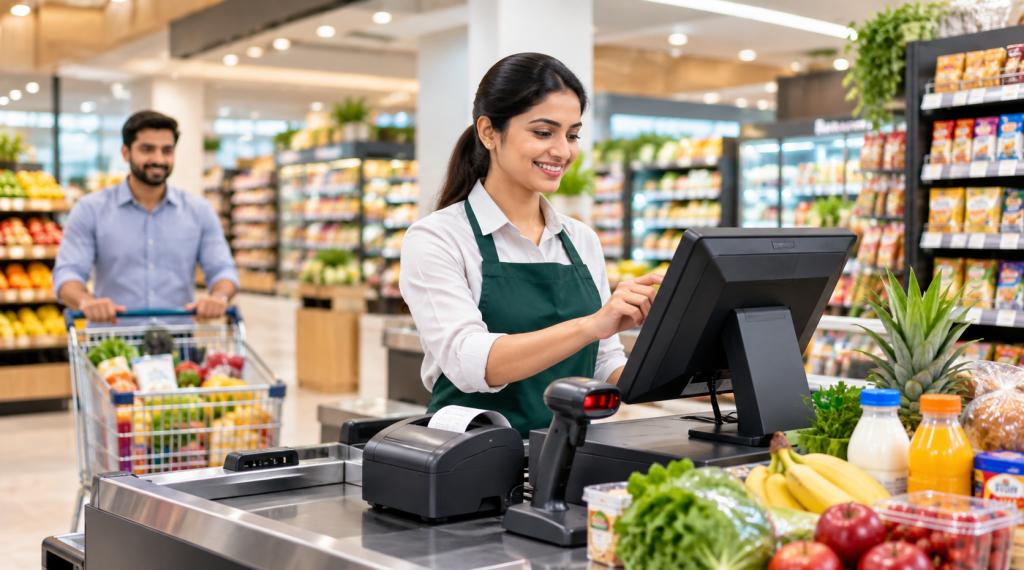
Another important consideration is the customer checkout experience. Supermarket customers generally expect quick billing and convenient payment options. Barcode-based product identification reduces manual product entry, while organized payment processing can make the checkout process easier for employees. During high-footfall periods, these small improvements can make the billing counter more efficient.
POS software can also help supermarket owners move away from decisions based purely on assumptions. Sales reports can provide information about frequently sold products, slower-moving inventory, transaction volumes, and other business patterns. Management can use these insights when reviewing product ranges, planning purchases, evaluating promotions, and monitoring store performance.
For supermarkets with more than one outlet, centralized management becomes even more important. Multi-store functionality can help businesses maintain greater visibility over different locations, depending on the software configuration. Instead of treating every outlet as an isolated operation, owners can create a more connected approach to inventory, pricing, reporting, and employee access.
The technology should also fit the physical supermarket environment. Barcode scanners, POS terminals, receipt printers, cash drawers, weighing equipment, networking infrastructure, and other hardware can all contribute to the effectiveness of a retail checkout setup. Choosing a technology partner capable of understanding both software and supporting infrastructure can simplify implementation.
For GST-related requirements, supermarket businesses should always configure their billing system according to their applicable tax requirements and verify current rules through the official government GST resources.







 Reach us on WhatsApp
