Web designing in a powerful way of just not an only professions. We have tendency to believe the idea that smart looking .

Best Retail POS Software for Small Businesses in India

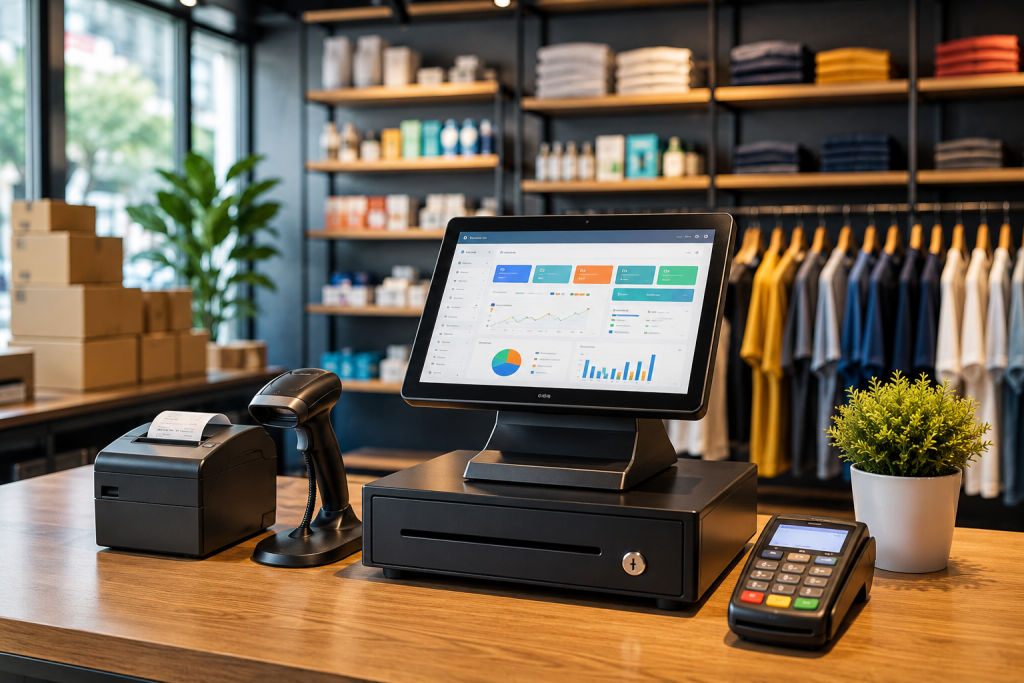
Running a small retail business in India involves much more than generating bills. Store owners need to manage products, stock levels, purchases, customer information, payments, returns, discounts, and daily sales reporting without creating unnecessary complexity. The right Best Retail POS Software for Small Businesses in India can bring these activities together in one organized system.

Modern retailers increasingly expect POS software to do more than print invoices. Current 2026 buyer guides emphasize GST-ready billing, inventory tracking, offline capability, reporting, scalability, and ease of use as important buying considerations.

For a small business, the objective should not simply be to choose software with the longest feature list. The better approach is to choose a POS solution that fits the store’s actual workflow, reduces manual work, gives reliable business information, and can continue supporting the business as it grows.

Best Retail POS Software for Small Businesses in India

Why Small Retail Businesses Need a Modern POS System?

A small retail store may start with a simple billing process, but manual systems become difficult to manage as product variety, customers, and daily transactions increase. Writing bills manually or maintaining stock in disconnected spreadsheets can make it harder to know what has sold, what needs replenishment, and how the business is performing.


A modern POS system connects billing with operational information. When a product is sold, the transaction can contribute to inventory and reporting, giving the business a more structured view of its daily activity. This reduces repetitive data entry and helps store owners make decisions using current business information rather than assumptions.


For Indian retailers, GST-related billing requirements also make accurate invoice management important. Businesses that fall under applicable e-invoicing requirements should keep their billing processes aligned with current government rules. The official GST e-invoicing resources explain that eligible invoices are reported to an Invoice Registration Portal and receive an Invoice Reference Number (IRN).


For current government guidance, retailers should always verify applicable requirements through the official GST e-invoicing resources rather than relying only on software marketing claims.

What Makes the Best Retail POS Software for Small Businesses in India?

The best solution is not necessarily the cheapest software or the platform with the greatest number of features. Small businesses need a balance between functionality, usability, reliability, support, and future scalability. A good POS should make everyday operations easier for employees and give owners better control over the business. Fast billing, organized inventory, customer management, reporting, and integration capabilities should work together instead of functioning as isolated modules.


This is where PAIT Systems positions its retail POS solution. PAIT’s Retail POS System is designed around transaction management, inventory management, CRM, reporting, integrations, security, and implementation support. PAIT also offers customized POS solutions for different retail categories, including apparel, cosmetics, jewellery, grocery and supermarket, sports equipment, and car accessories. This industry-specific approach can be valuable because different stores often require different product and inventory workflows.


For businesses evaluating a POS solution, it is useful to review PAIT’s Retail POS System and Customized Software solutions before making a decision.

Six Essential Features to Look For in the Best Retail POS Software for Small Businesses in India

1. Fast and Simple Retail Billing

A POS should allow staff to create bills quickly without navigating complicated screens. Faster checkout reduces queues and gives employees more time to serve customers. A clean interface is particularly important for small stores with limited staff.

2. Real-Time Inventory Management

Inventory visibility is one of the most important POS capabilities for retailers. The system should help track stock movement and provide useful information about products, sales, purchases, and available inventory so owners can make better replenishment decisions.

3. GST-Ready Invoicing and Records

Indian retailers need dependable invoice management. POS software should support the applicable tax structure and help maintain accurate transaction records. Businesses should also verify their specific GST and e-invoicing obligations rather than assuming every business follows the same requirements.

4. Customer and Purchase Management

Customer information can become a valuable business asset when managed responsibly. A good POS can help retailers maintain customer records, understand purchase history, and support better customer service, repeat purchases, and relevant promotional communication.

5. Reports That Support Decisions

A billing system becomes more valuable when it turns transactions into useful business insights. Sales summaries, product performance, inventory reports, and customer information can help owners understand what is happening inside the store and identify areas requiring attention.

6. Scalability and Integration

Small businesses can grow quickly. A POS should therefore be capable of supporting changing requirements, additional users, locations, or integrations where needed. PAIT states that its POS solution can integrate with accounting software, e-commerce platforms, and ERP systems, helping businesses maintain smoother data flow.


Why PAIT Systems Is a Practical Choice for Indian Retailers

Choosing POS software is ultimately a business decision, not simply a technology purchase. A retailer needs software that employees can learn, management can monitor, and the business can adapt as its requirements change. PAIT Systems has a long-standing background in retail and inventory management solutions. According to its company information, its retail software journey began in 2004 under Numeron Systems, later becoming LNB InfoTech and then PAIT BIZ Systems Pvt. Ltd.


PAIT’s retail POS offering focuses on practical business requirements such as transaction processing, inventory management, CRM, reporting, integrations, security, and support. This combination is particularly relevant for small and growing retailers that want to bring several operational activities into one system. Another important advantage is customization. A grocery store, apparel outlet, jewellery business, and cosmetics retailer do not manage products in exactly the same way. PAIT provides industry-specific POS solutions designed around these different requirements.


PAIT’s website also highlights testimonials from retail businesses describing long-term use, customization, usability, and support. These customer experiences can provide useful context when evaluating the practical side of a retail software provider.

For more information about PAIT’s complete retail technology offering, visit the PAIT Systems homepage.

How POS Software Supports Long-Term Retail Growth

A POS system should not be viewed only as a replacement for a traditional billing machine. When properly implemented, it becomes a central operational tool that connects sales activity with inventory, customers, reporting, and management. For a small retailer, the first benefit may be faster checkout. As the business grows, the same system can become increasingly important for monitoring stock, reviewing sales patterns, controlling user activity, managing multiple product categories, and maintaining consistent processes.

Better Control Over Daily Operations

Instead of depending on separate registers, notebooks, spreadsheets, and manual calculations, retailers can organize important operational information through a centralized POS workflow. This makes it easier for owners and managers to review business activity and identify operational gaps.


Reduced Manual Work

Automation can reduce repetitive tasks associated with billing, stock updates, reporting, and customer records. Employees can spend less time maintaining separate records and more time serving customers.


Improved Customer Experience

Long queues and slow billing can negatively affect the shopping experience. A streamlined checkout process can make transactions more convenient, especially during busy periods.


Smarter Stock Decisions

Inventory information helps retailers understand which products require attention. Better visibility can support purchasing decisions and reduce the operational problems associated with excessive or insufficient stock.


Better Business Visibility

A retailer should not have to wait until the end of the month to understand basic sales performance. Accessible reports can provide a clearer picture of daily and periodic business activity.


Ready for Future Expansion

The software chosen today should not become a limitation tomorrow. A scalable POS can help retailers transition from a single-store operation toward additional counters, branches, product categories, integrations, or more structured management processes.

PAIT’s website describes its POS solution as suitable for both single stores and multiple locations, while its home page also highlights real-time inventory management and sales analytics.



 

Frequently Asked Questions?

1. What is the Best Retail POS Software for Small Businesses in India?

The best retail POS software depends on the store’s size, product category, billing volume, inventory requirements, reporting needs, and growth plans. A suitable system should combine easy billing, inventory control, reporting, customer management, and scalability.

Yes. Even a small retail shop can benefit from faster billing, organized inventory records, customer management, and sales reporting. The key is choosing software that is simple enough for daily use without unnecessary complexity.

Important features include fast billing, inventory management, GST-ready invoicing, customer records, sales reports, barcode support where required, user controls, integrations, and reliable support.

Yes. Retail POS systems can connect sales activity with inventory management. This can help businesses monitor stock movement, identify products requiring replenishment, and maintain more organized product records.

Yes. Indian retailers should select billing software that supports their applicable GST requirements and maintains accurate transaction records. Businesses should separately confirm their specific tax and e-invoicing obligations based on current regulations.


Yes. Retail businesses often have industry-specific workflows. PAIT provides customized POS solutions for categories including apparel, cosmetics, jewellery, grocery and supermarkets, sports equipment, and car accessories.

Many modern POS systems can support multi-location operations. However, capabilities vary by provider and plan. Businesses planning expansion should confirm how the software handles multiple stores, users, inventory, reporting, and centralized management.

PAIT Systems combines retail POS functionality with inventory management, CRM, reporting, integrations, customization, and support. Its experience in retail software and industry-specific solutions makes it worth considering for Indian retailers looking for a long-term technology partner.

Reach us on WhatsApp
1